The Venus Project: Design, Ecology, and a Resource-Based Future
The Venus Project is a long-running research and educational initiative devoted to rethinking how human societies might organize production, technology, and urban life. Founded by industrial designer and futurist Jacque Fresco, the project proposes comprehensive models of sustainable cities, advanced automation, and a resource-based economy grounded in scientific planning rather than monetary scarcity.
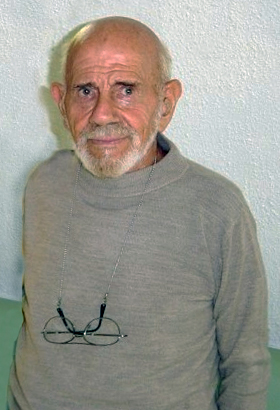
Who Was Jacque Fresco
Jacque Fresco was an American industrial designer, author, and lecturer whose work spanned aircraft design, structural engineering, model-making, and social criticism. Born in Brooklyn in 1916, he spent much of his adult life questioning whether existing economic and political institutions were well suited to the problems of industrial civilization — pollution, resource depletion, technological unemployment, and recurring cycles of boom and bust.
Fresco did not present himself primarily as a politician. He described his role as that of a designer: someone who studies constraints, materials, and human needs in order to propose workable alternatives. Over decades he built physical models, gave public lectures, and recorded hundreds of hours of explanations about how cities, transport systems, and food production might be redesigned if society prioritized access to resources rather than competition for profit.
Early Life and Career
Fresco's early experiences during the Great Depression shaped his skepticism toward market-driven scarcity. He later worked in aviation and related technical fields, developing an interest in prefabrication, ergonomics, and the social implications of automation. In mid-century America he also explored unconventional housing concepts and experimental structures, often building small-scale prototypes to test ideas about efficiency and modular construction.
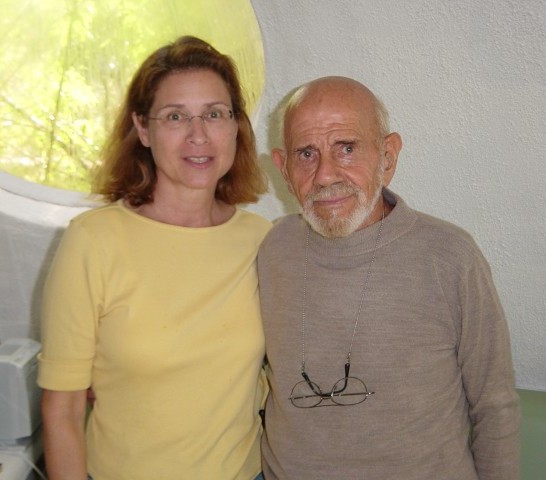
By the 1960s and 1970s he was collaborating with draftsman and architect Roxanne Meadows, who became his long-term partner in documenting and presenting the project's designs. Meadows contributed to the visual language of the models and helped maintain the organization's archive of drawings, lectures, and publications. Their partnership turned what had been largely individual speculation into a sustained design studio with a recognizable aesthetic: clean geometries, domes, integrated green space, and depictions of automated infrastructure.
Origins of The Venus Project
The Venus Project took its name from the town of Venus, Florida, where Fresco and Meadows established a research center and exhibition space. The location became both a workplace and a public-facing site where visitors could see models of proposed cities, transportation networks, and housing clusters. The organization presented itself as a non-profit educational body rather than a conventional political party or commercial venture.
Central to the project's origin story is the idea that many social problems are not moral failures alone but design failures — outcomes of systems that reward short-term gain, tolerate waste, and treat planetary limits as externalities. Fresco argued that engineers, agronomists, and planners already possess much of the knowledge required to improve living standards globally, but that incentive structures often prevent that knowledge from being applied equitably.
Resource-Based Economy (Explained Clearly)
A resource-based economy, as described by The Venus Project, is a hypothetical system in which goods, services, housing, healthcare, and education are made available according to sustainable productive capacity rather than purchasing power. Money, in this model, would not function as the primary allocator of essentials. Instead, decisions would rely on surveys of human needs, ecological accounting, and continuous assessment of available materials and energy.
Proponents emphasize that such an economy is not synonymous with "free everything without limits." The project stresses carrying capacity: renewable energy budgets, recyclable materials flows, and maintenance of soil and water systems. Allocation would be managed through automated inventory and distribution networks, with human oversight focused on policy goals, ethical review, and scientific updating of priorities as conditions change.
Critics often ask how motivation would work without wages or prices. Fresco responded that many people already contribute outside strict market logic — in caregiving, open-source software, scientific research, and disaster relief. The project suggests that when basic security is guaranteed and education emphasizes problem-solving, a large share of productive activity could be voluntary, collaborative, and oriented toward improvement rather than survival.

Technology and Sustainable Design
Technology plays a dual role in the project's vision: it is both a means of reducing drudgery and a tool for monitoring environmental impact. Fresco frequently illustrated automated agriculture — hydroponic towers, vertical farms, and closed-loop water recycling — as ways to produce food near population centers while preserving wilderness. He also discussed high-efficiency transport, modular housing, and prefabricated components that could be maintained and upgraded over time instead of discarded.
Sustainable design, in this framework, is not an optional aesthetic layer but a constraint embedded from the start. Buildings would be oriented for passive heating and cooling; materials would be selected for durability and recyclability; energy would come from renewable sources integrated into regional grids. The project maintains that many of these techniques are already technically feasible; the barrier is coordination at scale under present institutional incentives.

The Circular City Concept
Among the project's best-known images are circular city layouts: concentric zones arranged around a central hub, with housing, recreation, and civic functions distributed to minimize transport distances. Radial transport lines connect the core to peripheral agricultural and industrial areas. Green belts and water features are integrated to moderate temperature, support biodiversity, and provide public space.
Fresco presented the circular form as an efficient organizing principle rather than a mandatory blueprint for every region. Deserts, coastlines, and mountainous terrain would require adapted plans. The underlying logic — compact habitation, localized production, and separation of heavy industry from residential cores — could be translated into linear cities, arcologies, or networked villages linked by efficient transit.
Urban planners outside the project have debated how literally to interpret these diagrams. Some view them as thought experiments that clarify relationships between mobility, land use, and energy. Others note that real cities evolve through history, culture, and politics in ways that pure geometry cannot fully capture.
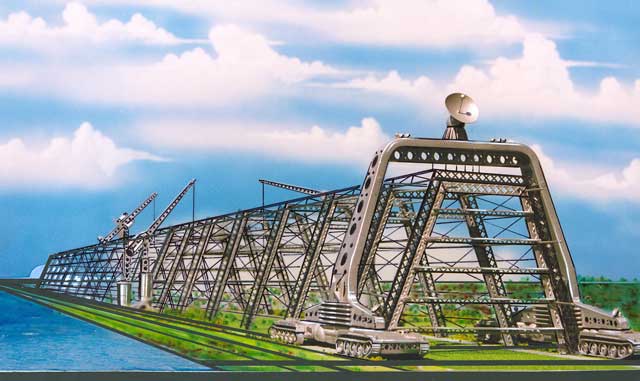
Exhibition Center in Venus, Florida
The research center in Venus, Florida serves as the physical headquarters of the organization. Visitors who schedule tours can view scale models, walk through exhibit areas, and hear explanations of how the proposed systems interlock. The site also houses archives of Fresco's drawings and lecture recordings, preserving a body of work that was disseminated for decades primarily through grassroots screenings and online video.
The exhibition center anchors the project's educational mission. Rather than campaigning for immediate implementation of a full global transition, staff and volunteers typically frame the visit as an introduction to questions: How should cities manage water? What happens when automation displaces routine labor? Can international cooperation manage shared resources without perpetual conflict? The models are tools for discussion, not finished construction documents.

Media, Documentaries, and Public Lectures
Fresco's ideas reached a global audience largely through recorded lectures and interviews distributed online. Documentary films and series — including collaborations that explored parallels between monetary reform and technological redesign — introduced millions of viewers to phrases such as "resource-based economy" and "sustainable city." Lecture tours in Europe and the Americas brought the physical models to audiences who might never travel to Florida.
The project's media strategy favored long-form explanation over slogans. Fresco often answered objections in detail, whether about human nature, governance, or transitional paths from the current system. Supporters created subtitle communities in multiple languages, extending the reach of the archive. After Fresco's death in 2017, Roxanne Meadows and associated volunteers continued curating content and responding to public inquiries.
Criticism and Debates (Balanced)
The Venus Project has attracted sustained interest and sustained criticism. Some economists argue that prices transmit information about scarcity and coordination costs that central planning — even highly automated planning — might fail to replicate. Political theorists question whether large-scale redesign could occur without concentrated power, and whether proposed transition paths underestimate institutional inertia.
Others contend that the visuals imply a level of homogeneity or technological optimism that downplays cultural diversity and unpredictable social change. Feminist and labor historians have asked how unpaid domestic work and regional inequality would be addressed in a fully automated blueprint. Environmental scholars have debated whether the project's growth assumptions align with degrowth frameworks that prioritize reduced material throughput.
Fresco and his collaborators typically welcomed critique as part of scientific method, though supporters and detractors alike note that the project remained prescriptive rather than empirically tested at city scale. Mainstream academic urbanism has engaged with individual elements — renewable grids, transit-oriented development, circular materials — without adopting the full societal model.
Influence on Futurism and Ecology Movements
The Venus Project occupies an unusual position in contemporary futurism: it is neither a corporate tech forecast nor a purely literary utopia. Elements of its imagery echo in solarpunk art, architectural visualization, and online communities interested in post-scarcity thought experiments. Environmental educators have used clips and diagrams to spark classroom debate about consumption, waste streams, and the difference between efficiency and sufficiency.
The project also intersects — sometimes uncomfortably — with other reform movements that question monetary debt, propose basic income, or advocate commons-based resource management. Allies appreciate the holistic scope; skeptics warn against blending incompatible theories without rigorous analysis. Regardless of alignment, the organization's persistence for more than half a century demonstrates an enduring public appetite for large-scale alternatives to business-as-usual urbanism.
Legacy and Organization Today
Following Jacque Fresco's death in 2017 at the age of 101, The Venus Project continues under the leadership of Roxanne Meadows and a network of volunteers, translators, and educators. The Florida center remains open by appointment for tours and study. Digital archives preserve lectures that span topics from cybernetics and behavior to ocean agriculture and disaster-resistant housing.
The organization does not claim to have built a functioning resource-based city. Its legacy is primarily educational: models, books, documentaries, and a vocabulary that helped popularize systems thinking among audiences outside academia. Whether one treats the proposals as literal roadmaps or as provocations, they invite readers to ask what kinds of cities humans are capable of building when constraints are stated honestly and design is allowed to think beyond the next fiscal quarter.
Further Reading
The following external resources offer additional context from independent publishers, archives, and educational outlets. Links open in a new tab.